› Engines
Tools that make real files.
Each engine runs in your browser and teaches the real process behind the work. No account, nothing to install.
Learn AI by building
Curate a dataset, then train a real model on it. See a drawing the way an image model does, and watch bots playtest and pathfind. Start with the Dataset Engine → Sort them by kind of algorithm →
Ages 10–16 and grown-ups
Dataset Engine
Curate a picture dataset the way data curators do
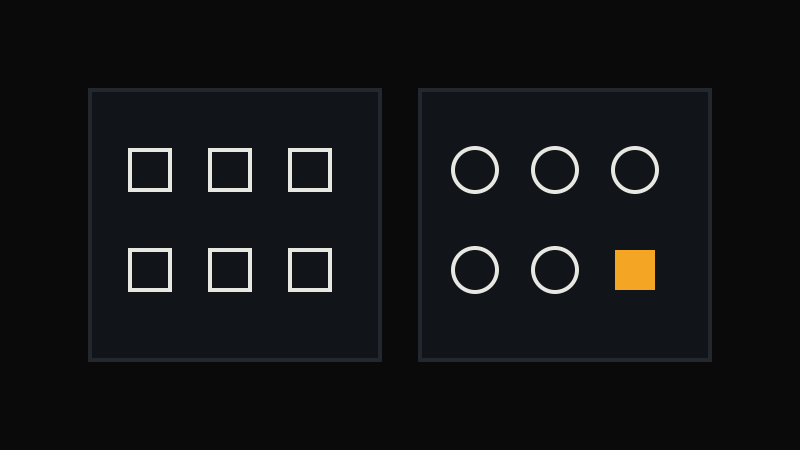
Write a labeling guideline, label 60 drawn pictures, bring in a second labeler and measure how often you agree. Remove copies, balance the classes and split off a test set, then watch a tiny model do better on your set than on the messy pile. Tap-only, nothing to type.
Exports: PNG class folders (ZIP) · labels.csv · datasheet.md · .hbdata · Datasheet booklet (Activities Pass)
Open the engine →
Ages 10–16 and grown-ups
Model Engine
Train, test and ship a model the way ML engineers do
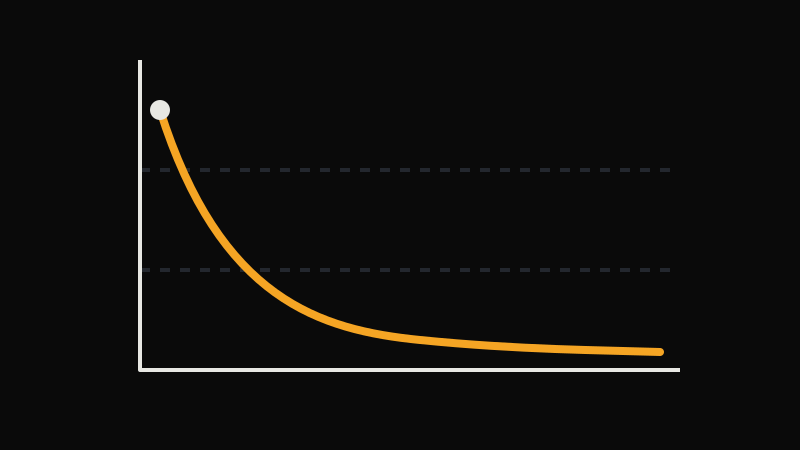
Train a real tiny model on the bundled pictures or on your own .hbdata, watch the loss fall and see where it looks. Choose a threshold from the mistakes it makes, then freeze it into an ONNX file you can open in the free Netron viewer, with a model card and a Python notebook that rebuilds it.
Exports: ONNX model · model-card.md · Jupyter notebook (.ipynb) · .hbmodel · Certificate and model card (Activities Pass)
Open the engine →
Ages 8–16 and grown-ups
Pixel Engine
Draw pixel art, then see it the way an image model does
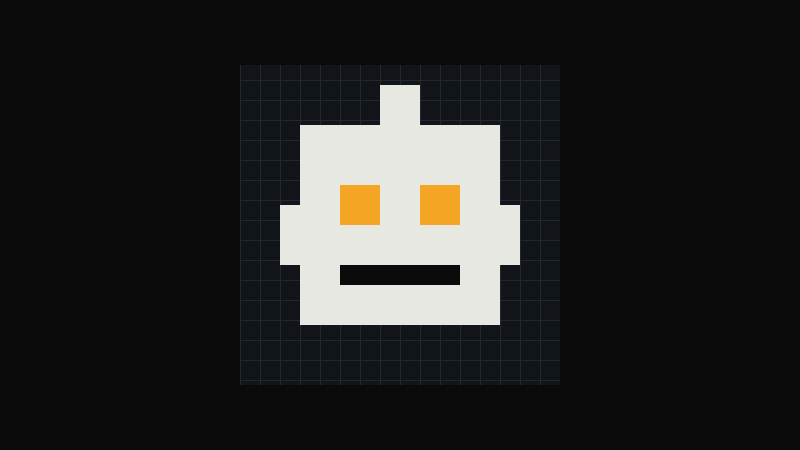
Paint a 16×16 sprite by tapping, then flip to Robot eyes: the same picture as numbers, run through a real 3×3 filter. Edges light up, blur smooths, sharpen pops, and tapping any square shows the math. Make the flipped-and-turned set image models train on, then take it to Python or Brick Builder. Tap-only, nothing to type.
Exports: PNG + sprite sheet · NumPy .npy · GIMP .gpl palette · Brick mosaic (.hbbricks) · .hbpixel · Sticker and poster booklet (Activities Pass)
Open the engine →
Ages 10–16 and grown-ups
Tokenizer Engine
Cut words into tokens the way a language model does
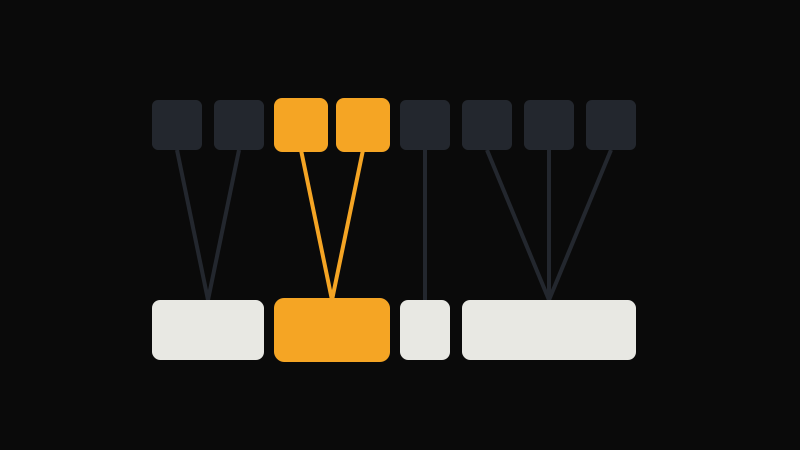
Start from raw bytes and tap Merge to glue the most common pair into a new token, one merge at a time, until a story shrinks. See why the same sentence costs more in a language the tokenizer never learned, then download a vocab.json and merges.txt that Hugging Face loads. Tap-only, nothing to type.
Exports: Hugging Face vocab.json + merges.txt · Printed booklet (Activities Pass)
Open the engine →
Ages 10–16 and grown-ups
Embedding Engine
Map meaning the way a search engine does
Put words and Bots and Critters pictures into one space of seven numbers you can read. Tap anything to see its nearest neighbors by cosine similarity, search the pictures with a word, try word arithmetic like robot − metal + fur, build your own thing with sliders, then download TensorFlow Projector files. Tap-only, nothing to type.
Exports: TensorFlow Projector vectors.tsv + metadata.tsv · Printed booklet (Activities Pass)
Open the engine →
Ages 10–16 and grown-ups
Attention Engine
Look inside a transformer
A tiny transformer with three hand-set attention heads reads six-word sentences. Tap a word to see where each head looks on a heatmap, switch the causal mask on and off, swap words to watch the heads shift, then download the heatmaps and every weight. Tap-only, nothing to type.
Exports: Heatmap PNG + weights JSON
Open the engine →

Ages 8–16 and grown-ups
Deck Engine
Design a card game, then let bots playtest it
Tap together a deck of 4 to 8 card kinds and tune three rules. Bots play it 1,500 times and say in plain words what's off: the first player wins too often, one card decides the games, or it's a coin flip. Fix it, playtest again, and print it on Avery 5388 cards. Tap-only, nothing to type.
Exports: Print-and-play PDF (Avery 5388) · Deck CSV · Playtest CSV · .hbdeck · Boxed-game booklet (Activities Pass)
Open the engine →

Ages 8–16 and grown-ups
Algorithm Arena
Watch six pathfinding bots think, race and get stuck
Step through what BFS, Dijkstra, A* and three simpler bots check on the same maze, race them, then change the maze until one breaks. See the map as nodes, edges and costs. Tap-only, nothing to type.
Exports: Shareable maze link
Open the engine →
Make real things
Design a house, compose a song, build with bricks and test the physics of sport, the way the people who do it for a living work.
Architect launch · What architects do · What musicians do
Teens and grown-ups
Architect Engine
Design a house the way architects do
Walk the six phases a real architect uses, from the site and the brief to construction. Draw walls, doors, windows, rooms, a stair and a roof, then orbit the house in 3D. Start in Easy mode, one step at a time, or go Pro. Export a PDF sheet set, a DXF model and a bid package with a DXF per sheet, the schedule CSVs and a spec, and save a .hbarch file. Save plan and 3D pictures, or the 3D model as a .glb file.
Exports: PDF sheets · DXF · Bid package ZIP (DXF per sheet, schedule CSVs, spec) · .hbarch · PNG and SVG pictures · glTF 3D (.glb)
Open the engine →
Teens and grown-ups
Score Engine
Compose the way musicians do
Walk motif, form, harmony, parts, rehearsal and export. Place notes on a pitch lane, add chord symbols that become real harmony, preview in the browser, and download MIDI, MusicXML, a stamped PDF lead sheet, and a .hbscore project.
Exports: MIDI (SMF) · MusicXML · PDF lead sheet · .hbscore
Open the engine →
Teens and grown-ups
Fit-check Engine
See if a part fits a Bambu Lab printer
Size a box, a vertical cylinder, or a plate with one hole. Pick a Bambu Lab printer, see whether the part fits the usable box, and download a 3MF or STL that opens in Bambu Studio.
Exports: 3MF (Bambu Studio) · STL (Bambu Studio) · .hbprint
Open the engine →
Teens and grown-ups
Desktop Builder
Configure a home desktop that could actually be built
Choose the parts of one home desktop, including graphics, and save a file with the parts list and a learning estimate. Not a store.
Exports: .hbdesk
Open the engine →
Ages 10–16 and grown-ups
Sports Math & Physics Engine
Carve a ski turn, arc a free throw, bend a pitch, draft a peloton
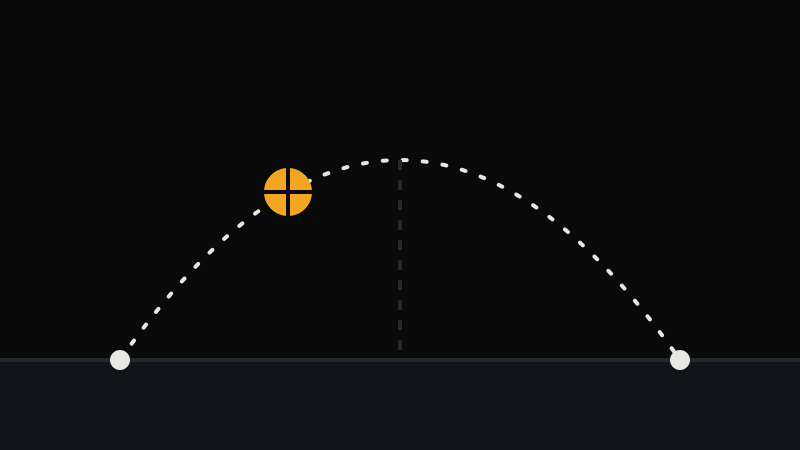
Test the real physics equations behind four sports: ski gravity decomposition and carved turn radius, basketball parabolic arcs and rim aperture, baseball/soccer Magnus spin curves, and cycling cubic drag. Download CSV telemetry, a printable PDF lab sheet, an SVG diagram, and a .hbsport file.
Exports: CSV telemetry · PDF lab sheet · SVG diagram · .hbsport
Open the engine →

Ages 8–16 and grown-ups
Brick Builder
Build with real-size bricks, then print the instructions
Snap bricks, plates and tiles together on a baseplate, as many as you like, in real sizes and colors you can buy. Download the parts list, a BrickLink or Pick a Brick order and an LDraw model. With the Activities Pass, print your build as a step-by-step instruction booklet.
Exports: .hbbricks · LDraw .ldr · Parts CSV / BrickLink / Pick a Brick · PDF instruction manual (Activities Pass)
Open the engine →
Ages 8–16 and grown-ups
Beat Engine
Make a whole song, start to finish
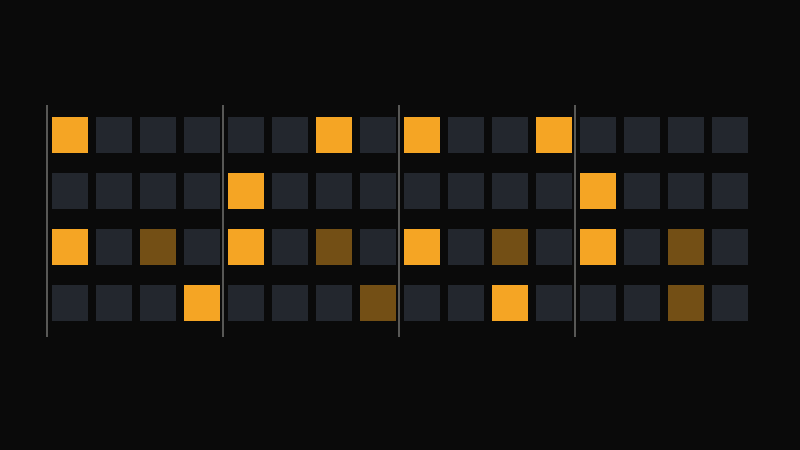
Tap drums on 16 pads, add a boom bass and keys where no note is wrong, switch it up, chop a pattern into slices, and arrange an intro, verses and hooks into a song up to four minutes long. Mix it, see it the way speech and music models hear it with Robot ears, then take it home as a WAV, stems and MIDI. Tap-only, nothing to type.
Exports: WAV song + stems · MIDI · Robot ears PNG + NumPy .npy · .hbbeat · Beat booklet (Activities Pass)
Open the engine →
Ages 8–16 and grown-ups
Math Beats
Hear the math in music
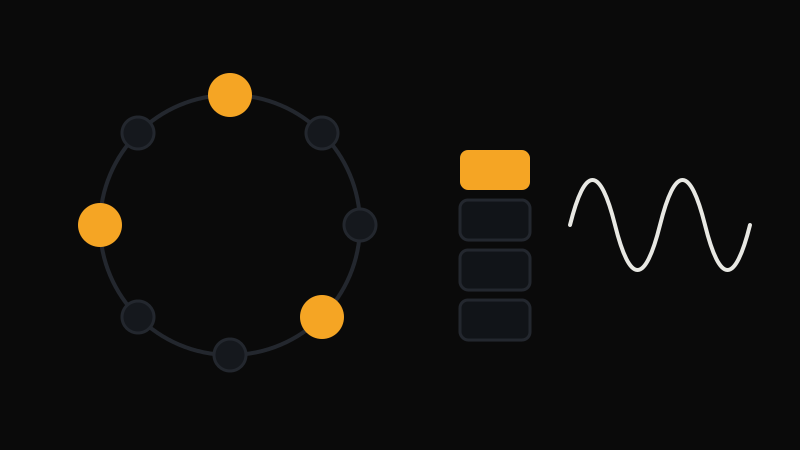
Guess first, then listen: a stack plays your tune backwards and a line plays it in order, hits spread around a ring turn into dance rhythms, two rings meet at their least common multiple, simple fractions make harmony, and copies of a wave make its sound. Tap-only, nothing to type.
Open the engine →
Ages 8–16 and grown-ups
Board Bench
Inspect boards, quiz parts, practice wiring in a sim
Look at generic microcontroller boards in 3D or on a 2D diagram, find parts in a quiz, assemble from a tray, and complete guided low-voltage wiring missions in a simulation. No account, no AI, progress stays on this device.
Open the engine →
Ages 10–16 and grown-ups
Chip Engine
Design a chip, print it and test it
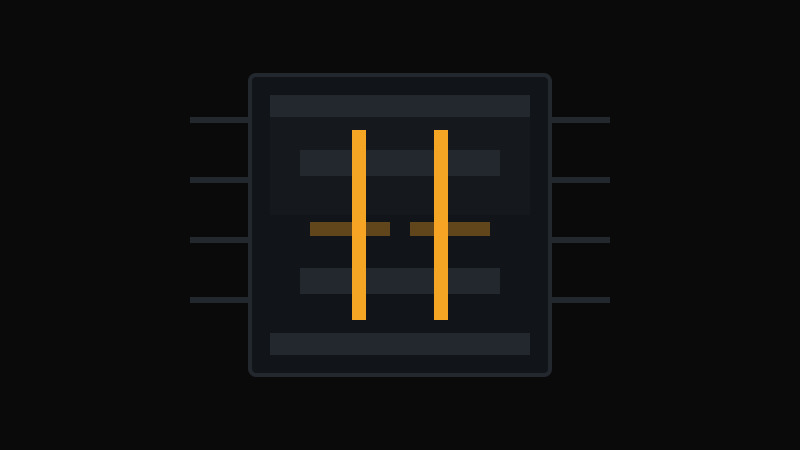
Paint the layers of a real kind of chip, from a NOT gate to a NAND to a tiny neuron, and a checker tells you when it works. Send it through a toy chip factory where your light, resist and etch choices change what prints, then test every copy on the wafer. Take home a GDSII layout file, the masks and a slice through your chip. Nothing to type.
Exports: GDSII layout (.gds) · Mask SVGs (.zip) · Cross-section SVG · .hbchip · Chip booklet (Activities Pass)
Open the engine →
Share this
Send the page with a link that remembers how it was shared.